The Complete Guide to Storing and Serving Wine Properly
Wine is more than a beverage — it’s a living product that can change over time, for better or worse. Whether you’re a casual drinker or a budding enthusiast, knowing how to store and serve wine correctly can make a big difference in the flavor, aroma, and overall experience.
In this guide, you’ll learn the essential practices to preserve your wine’s quality and enjoy it at its best.
Why Proper Storage and Serving Matter
Wine is sensitive. It reacts to temperature, light, humidity, and even movement. Poor storage or serving techniques can damage the wine or dull its natural characteristics.
Some of the most common mistakes people make include:
- Storing wine in the kitchen or near windows
- Serving wine too cold or too warm
- Using the wrong type of glass
- Not letting red wine breathe
- Keeping an opened bottle incorrectly
Avoiding these pitfalls ensures that every glass you pour delivers the taste the winemaker intended.
How to Store Wine at Home
You don’t need a fancy wine cellar to store wine properly. With a few simple principles, you can create a wine-friendly environment almost anywhere.
1. Keep It Cool (But Not Cold)
Wine is best stored at a consistent temperature — ideally between 10°C and 15°C (50°F to 59°F). Avoid fluctuations.
- Too hot: Speeds up aging and can “cook” the wine, making it taste flat or sour.
- Too cold: Can dry out corks or cause the wine to freeze (especially in a fridge or freezer).
Tip: If you don’t have a wine fridge, a cool closet or a basement works well.
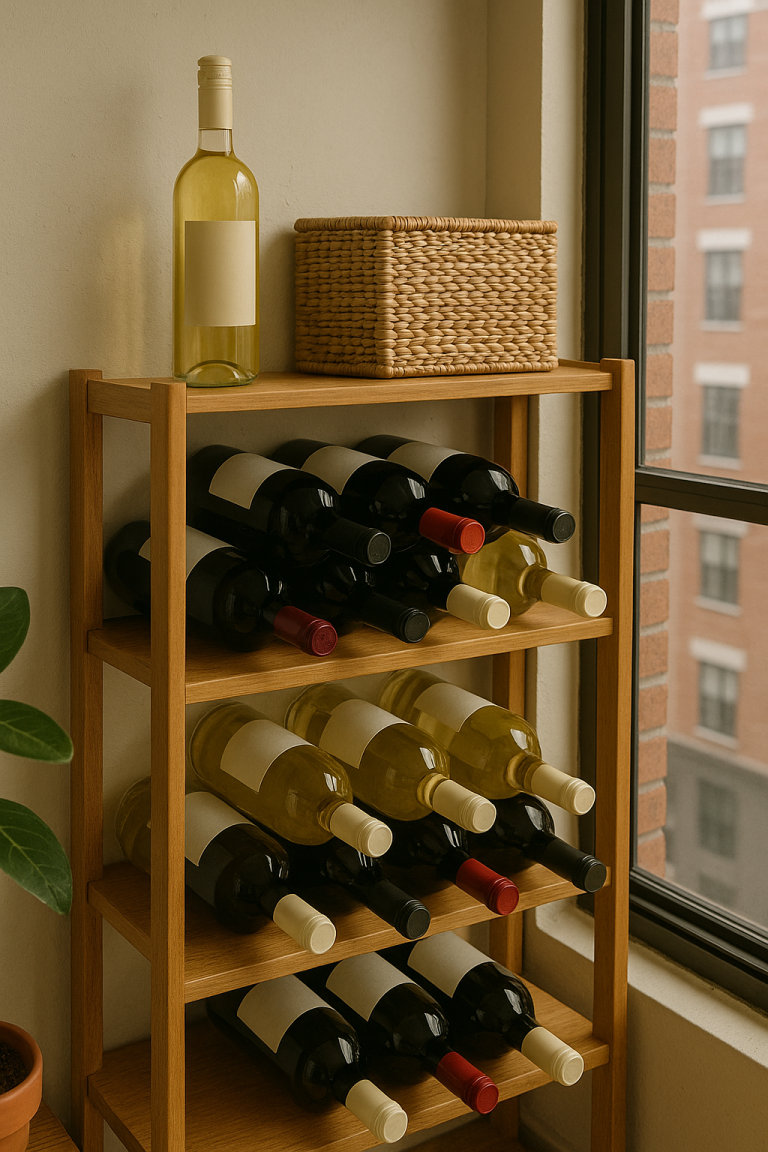
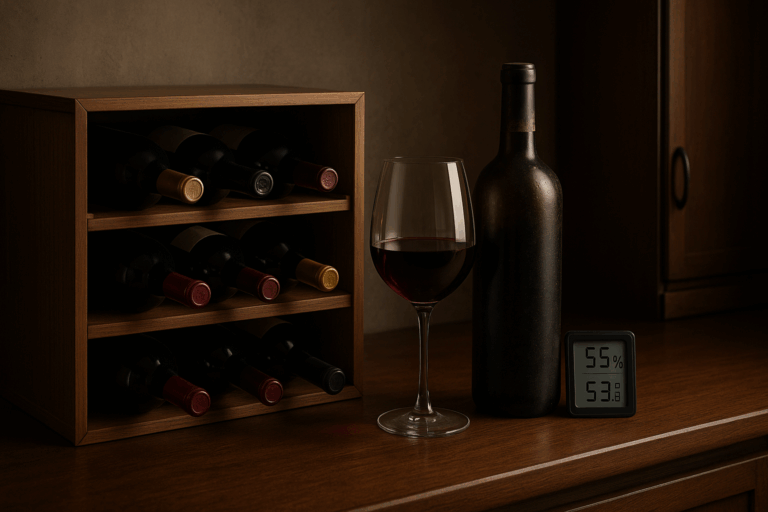
2. Store Bottles Horizontally
Wines with corks should be stored on their sides to keep the cork moist. A dry cork can shrink and let air into the bottle, causing oxidation.
Screw-cap wines don’t need this, but horizontal storage still helps save space and keep bottles organized.
3. Protect from Light
UV rays (especially from sunlight) can break down wine compounds and cause it to age prematurely. This is why many wine bottles are dark-colored.
Avoid: Window sills, brightly lit kitchens, or areas with fluorescent lighting.
4. Keep Away from Vibrations
Constant vibrations (from washing machines, loudspeakers, or heavy foot traffic) can disrupt the wine’s natural aging process and stir up sediment.
Pro tip: A wine rack in a quiet, low-traffic part of the home is ideal.
5. Humidity Matters
Wine loves a bit of humidity — around 60–70% is ideal. This prevents corks from drying out and shrinking. Too much humidity can cause mold, though.
If you live in a very dry or humid environment, consider using a small humidifier or silica packs to balance it.
How to Serve Wine the Right Way
Serving wine properly is just as important as storing it. Temperature, glassware, and decanting all impact the flavor and aroma.
1. Serving Temperature Guide
Most people serve wine at the wrong temperature — too cold for reds, too warm for whites. Here’s a quick guide:
| Wine Type | Serving Temp (°C / °F) |
|---|---|
| Sparkling Wine | 6–10°C / 43–50°F |
| Light White Wines | 7–10°C / 45–50°F |
| Full-Bodied White Wines | 10–13°C / 50–55°F |
| Rosé | 8–12°C / 46–54°F |
| Light Red Wines | 12–14°C / 54–57°F |
| Full-Bodied Red Wines | 16–18°C / 60–65°F |
| Dessert Wines | 6–10°C / 43–50°F |
Quick trick: Chill white wine for about 2 hours in the fridge. Let red wine sit out for 15–20 minutes before serving.
2. Choosing the Right Glass
The shape of the glass affects how aromas and flavors are experienced.
- Red Wine: Large, round bowl for better oxygen exposure.
- White Wine: Smaller bowl to preserve aromas and cooler temperature.
- Sparkling Wine: Flute or tulip shape to retain bubbles.
- Dessert Wine: Small glass to concentrate sweetness and aroma.
Always use clear glass — avoid colored or etched glasses that can distract from the wine’s color and clarity.
3. To Decant or Not to Decant?
Decanting allows wine to breathe, which softens tannins and enhances aromas.
- Young red wines: Can benefit from 30–60 minutes of decanting.
- Older wines: Should be decanted gently to remove sediment.
- White and sparkling wines: Usually don’t need decanting.
If you don’t have a decanter, swirling the wine in a glass helps oxygenate it.
4. Opening and Pouring
Use a quality corkscrew and open the bottle slowly, especially for older wines. Pour about 1/3 of the glass — this leaves room to swirl and release aromas.
Extra tip: Wipe the bottle neck after pouring to prevent drips.
What to Do with Open Wine Bottles
Wine changes once opened, and oxygen begins to affect the taste. But that doesn’t mean you have to finish the bottle in one night.
Storage Tips:
- Re-cork it tightly, ideally using the original cork or a wine stopper.
- Refrigerate all open wines — even reds. Cold slows oxidation.
- Use vacuum pumps or wine preservers to extend freshness.
Shelf Life After Opening:
- Sparkling Wine: 1–2 days (use a special stopper)
- White and Rosé: 3–5 days
- Red Wine: 3–5 days
- Fortified or Dessert Wine: Up to 1 month (thanks to high sugar/alcohol)
If wine smells sour, musty, or like vinegar — it’s past its prime.
Bonus Tips for Wine Enjoyment
- Let wine “rest” after transport: Especially important if shaken or recently shipped. Give it 24 hours.
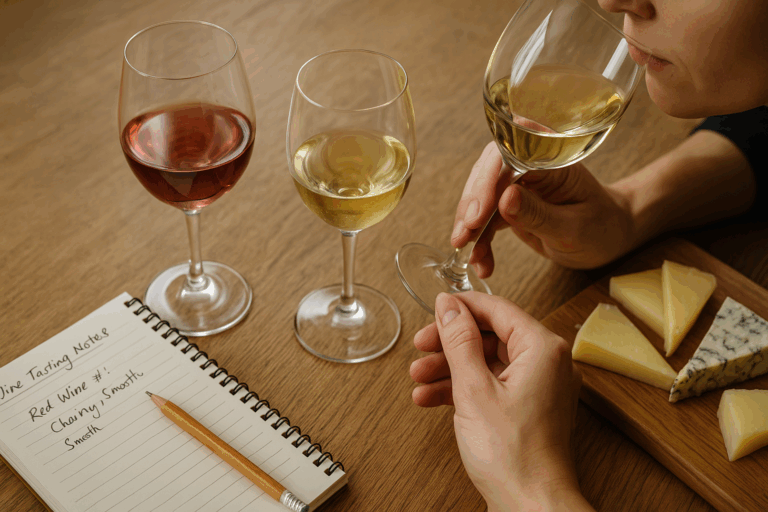
- Keep a wine journal: Note what you liked or disliked about each wine. Helps build your palate.
- Serve with intention: Set the mood with proper glasses, lighting, and food pairing. Wine is about experience as much as taste.
A Better Wine Experience, One Glass at a Time
Wine doesn’t have to be intimidating. With the right storage conditions and a little care in serving, you can transform a simple drink into a full sensory experience. Whether you’re popping open a $10 bottle or a fine vintage, these small adjustments make a big difference.
So the next time you’re tempted to throw a bottle in the fridge door or pour wine into a coffee mug — take a step back, follow these simple tips, and let the wine shine. 🍷
Here’s to better wine moments — every time.