How to Taste Wine Like a Sommelier: A Beginner’s Guide
Tasting wine can seem intimidating at first — all the swirling, sniffing, and talk of aromas you’ve never heard of. But the truth is, anyone can learn how to taste wine like a sommelier. With a little guidance and practice, you’ll be able to recognize flavor notes, identify wine styles, and understand what you like (and why).
This beginner’s guide will walk you through the basic steps of wine tasting and give you the confidence to explore the world of wine like a pro.
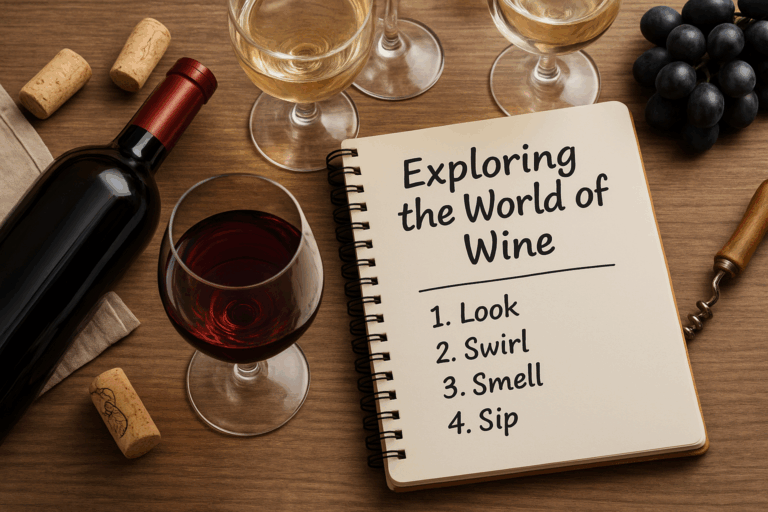
🍷 Step 1: Look — Observe the Wine’s Appearance
Start by pouring a small amount of wine into a glass. Hold the glass up to the light or against a white background and observe:
- Color and clarity: Is the wine pale or deep? Clear or cloudy?
- Tears (legs): When you swirl the glass, do droplets form and slowly run down the inside? This can give clues about alcohol content and body.
👉 Tip: Red wines become lighter with age, while white wines often darken.
👃 Step 2: Smell — Engage Your Nose
Before tasting, bring the glass to your nose and take a gentle sniff. Swirl the wine, then smell again — swirling helps release the aromas.
What to notice:
- Primary aromas: Fruits, flowers, herbs (e.g., cherry, citrus, rose)
- Secondary aromas: From fermentation — think bread, cheese, or butter
- Tertiary aromas: From aging — such as leather, tobacco, or dried fruit
There’s no wrong answer — what you smell is personal, but learning to identify scent categories helps build your palate.
👅 Step 3: Taste — Explore Flavor and Texture
Take a small sip and let the wine spread across your tongue.
Focus on:
- Sweetness: Is the wine dry, off-dry, or sweet?
- Acidity: Does it make your mouth water? Higher acidity means more freshness.
- Tannins (in red wine): Do you feel any drying sensation on your gums?
- Body: Is it light like water or heavy like whole milk?
- Flavors: What fruits or spices do you notice?
- Finish: How long do the flavors linger after swallowing?
👉 Pro Tip: Spit, don’t sip — especially if you’re tasting multiple wines. Sommeliers often spit to stay focused.
🧠 Step 4: Think — Reflect and Take NotesOnce you’ve looked, smelled, and tasted the wine, think about the overall impression:
- Did you like it? Why or why not?
- Would it pair well with a particular food?
- How does it compare to other wines you’ve tried?
Keeping a wine journal is a great way to develop your tasting skills over time.
✅ Wine Tasting Etiquette: Do’s and Don’ts
- ✅ Do hold the glass by the stem — this prevents warming the wine with your hand.
- ✅ Do ask questions at tastings — professionals love to share.
- ❌ Don’t wear strong perfume — it interferes with aromas.
- ❌ Don’t drink wine too cold or too warm — temperature affects taste.
🔄 Practice Makes Perfect
The more wines you taste, the more you’ll start to recognize patterns and develop your preferences. Try tasting the same grape (like Cabernet Sauvignon) from different regions. Or compare young vs. aged wines. You don’t need to be a sommelier — but thinking like one will deepen your enjoyment of every glass.
❓ FAQs: Wine Tasting for Beginners
Do I need special glasses to taste wine properly?
No, but using a standard tulip-shaped wine glass helps concentrate aromas. Avoid flat or wide glasses if possible.
How can I tell if a wine is “good”?
A “good” wine is balanced (no one flavor dominates) and has a pleasant finish. But ultimately, if you enjoy it, it’s good for you.
Is it okay to spit the wine during tasting?
Absolutely — professionals often spit to avoid alcohol overload and stay focused.
Can I taste wine if I don’t know the terminology?
Yes! You don’t need fancy words. Start with simple notes: sweet, sour, fruity, spicy. Describing what you sense is more important than sounding sophisticated.
What’s the best way to train my palate?
Taste wines often, take notes, and try new styles. Visiting tastings, watching videos, or using a wine aroma wheel can also help.
🥂 Final Thoughts
Tasting wine like a sommelier isn’t about memorizing jargon — it’s about slowing down and paying attention. With practice, your senses will sharpen, your vocabulary will grow, and your confidence will soar.
So pour yourself a glass, trust your palate, and start exploring. The world of wine is rich, complex, and — most of all — fun.