How to Read a Wine Label Like a Pro: Key Terms and Tips Explained
When you’re standing in front of a wall of wine bottles at the store, trying to pick one that suits your taste or occasion, the wine label can either be your best guide — or a confusing jumble of foreign terms, dates, and symbols. Learning how to read a wine label is one of the most valuable skills a wine enthusiast can develop, and it’s not as complicated as it may seem.
In this article, you’ll discover what information is most important on a wine label, what it tells you about the wine inside the bottle, and how to use it to make better choices.
Why Wine Labels Matter
Wine labels aren’t just for show — they offer a roadmap to the style, quality, origin, and even personality of the wine. Once you know how to interpret them, you’ll be able to:
- Choose bottles that match your taste preferences
- Understand price differences
- Identify wines from specific regions or grape varieties
- Avoid disappointment when trying something new
Whether you’re buying a bottle for yourself or as a gift, knowing what the label tells you can save time and money — and make you look like a pro.
The Key Elements of a Wine Label (and What They Mean)
Wine labels may vary by country and producer, but they generally include the following core elements:
1. Producer or Brand Name
This is usually displayed prominently at the top or center of the label. The producer (winery or company) is responsible for making the wine and is often a key indicator of quality. For example, “Robert Mondavi,” “Penfolds,” or “Château Margaux.”
Tip: If you’ve enjoyed a wine from a certain producer, you’ll likely enjoy other wines they make too.
2. Grape Variety
This tells you what type of grape the wine is made from — and it’s essential for understanding flavor expectations.
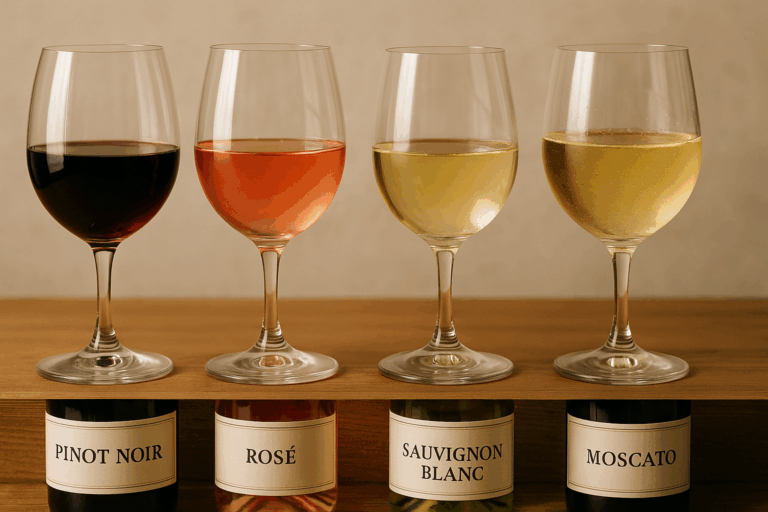
- Cabernet Sauvignon: Bold, dark fruits, tannic
- Merlot: Softer, plummy, smooth
- Chardonnay: Can range from buttery to crisp and citrusy
- Sauvignon Blanc: Fresh, herbal, zesty
- Pinot Noir: Light-bodied, cherry, earthy notes
Some regions, especially in Europe, use the region name instead of the grape variety — which brings us to the next point.
3. Region or Appellation
This refers to the area where the grapes were grown. In the world of wine, “where it’s from” is as important as “what it is.”
- Old World (Europe): Wines from France, Italy, Spain, etc., often list the region (e.g., Bordeaux, Rioja, Chianti) rather than the grape.
- New World (U.S., Australia, Chile): These often list the grape variety and region (e.g., “Chardonnay – Napa Valley”).
Why it matters: Climate and soil greatly affect grape characteristics — this is known as terroir.
4. Vintage (Year)
The year listed on the bottle is when the grapes were harvested. It gives insight into the wine’s age and how it might taste.
- Younger wines (1–3 years old) are usually fresh and fruity.
- Older wines (5+ years, depending on the type) may have more complex, developed flavors.
Important: A poor weather year can affect grape quality — and prices — in certain regions.
5. Alcohol by Volume (ABV)
Usually found at the bottom or side of the label, this indicates the strength of the wine. It also hints at style.
- Low (8–11%): Light, sweeter wines (like Moscato)
- Medium (12–13.5%): Balanced wines (most whites and reds)
- High (14–15%+): Bold, intense wines (like Zinfandel, Amarone)
6. Quality Classification (Optional)
Some countries include quality levels based on strict production rules. Examples:
- France: AOC (Appellation d’Origine Contrôlée)
- Italy: DOCG, DOC, IGT
- Spain: DO, DOCa
- Germany: Prädikatswein system (e.g., Spätlese, Auslese)
Note: These systems are complex, but generally, the more letters, the higher the quality standards.
7. Tasting Notes and Descriptions
Many New World producers include flavor descriptions like “notes of blackberry and oak” or “crisp with citrus undertones.” While subjective, these hints help you decide if the wine suits your preferences.
Common Wine Label Terms (Decoded)
Here are some words and phrases you’ll see frequently — and what they actually mean:
- Estate Bottled: The wine was grown, produced, and bottled in the same place. Usually a sign of quality.
- Reserve or Reserva: May indicate better quality or aging, though not always regulated (especially in the U.S.).
- Old Vines: Grapes from older vines, which often produce richer, more concentrated flavors.
- Barrel-aged: Aged in oak barrels — expect toasty, vanilla, or smoky notes.
Reading Labels from Different Regions
Understanding how labels differ between regions is key:
France
You might see:
“Château Margaux 2018 – Margaux – Appellation Margaux Contrôlée”
This means it’s a wine from the Margaux region of Bordeaux, made in 2018.
No grape listed? In this case, it’s likely Cabernet Sauvignon, Merlot, or a blend (typical for Bordeaux).
Italy
Example:
“Chianti Classico DOCG – 2020”
DOCG = Italy’s highest quality tier. The grape is likely Sangiovese, typical for Chianti.
United States
More straightforward:
“Robert Mondavi – Cabernet Sauvignon – Napa Valley – 2021”
You know the producer, grape, region, and year at a glance.
Red Flags on a Wine Label
- No region specified: “American Red Wine” is vague and could mean mixed or lower-quality grapes.
- No vintage: Non-vintage wines can be fine, but if you’re seeking character or aging potential, check the year.
- Overly flashy branding: Some cheap wines focus more on design than substance. Always read beyond the graphics.
Pro Tips for Shopping Smarter
- Snap a photo of labels you like: Build your own database of favorites.
- Use wine apps like Vivino: Scan a label and read reviews.
- Explore supermarket exclusives carefully: Some are great value; others are just overpriced.
Why Learning Label Literacy Pays Off
Reading a wine label like a pro not only helps you buy better bottles — it connects you with the stories behind each wine. You’ll discover favorite producers, regions you love, and styles that suit your palate.
No longer will you feel stuck in front of the wine shelf or have to rely solely on the price tag. Instead, you’ll have the confidence to explore the world of wine with curiosity and clarity.
So the next time you’re in the store or browsing a wine list, take a moment to truly read the label. Behind every bottle is a vineyard, a vintage, and a vision — and now you know how to decode it all.
Cheers to your growing wine knowledge! 🍷